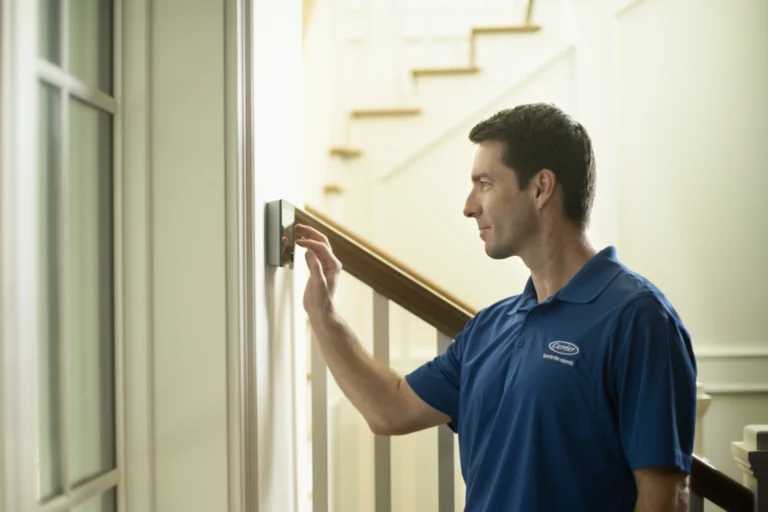

Understanding Smart HVAC Technology Integration
Smart home technology has revolutionized how we interact with our heating and cooling systems, transforming basic temperature control into sophisticated comfort management. At Davis Air Conditioning, we’ve witnessed this evolution firsthand since 1976, and today’s smart HVAC solutions offer unprecedented control and efficiency gains that translate into measurable financial returns. Modern smart thermostats connect seamlessly with your existing HVAC installation, learning your family’s patterns and preferences while optimizing energy consumption throughout your Cache, Lawton, or Duncan area home.
The integration process involves more than simply replacing your old thermostat with a Wi-Fi enabled model. Smart HVAC systems incorporate multiple sensors throughout your home, monitoring temperature variations, humidity levels, and occupancy patterns to create customized comfort zones. These systems communicate with your air conditioning and heating equipment in real-time, adjusting operation cycles to maintain optimal efficiency while ensuring consistent comfort. Advanced algorithms analyze weather forecasts, electricity rate schedules, and historical usage data to pre-cool or pre-heat your home during off-peak hours, reducing strain on your equipment and lowering utility costs.
Calculating Energy Savings and Efficiency Gains
The financial benefits of smart HVAC technology become apparent when examining actual energy consumption patterns. Studies indicate that programmable smart thermostats reduce heating and cooling costs by an average of 23% annually, with some households in the Fort Sill and Elgin areas experiencing even greater savings due to our region’s temperature extremes. These savings stem from multiple efficiency improvements, including optimized runtime scheduling, reduced equipment cycling, and elimination of unnecessary heating or cooling when spaces remain unoccupied.
Our factory-trained professionals analyze your current system’s performance baseline before smart technology implementation, measuring factors like runtime hours, energy consumption peaks, and temperature differential maintenance. This comprehensive assessment allows us to project realistic savings based on your specific usage patterns and equipment specifications. For a typical 2,500 square foot home requiring AC repair or system upgrades, smart technology integration often reduces annual energy costs by $300 to $500, depending on existing equipment efficiency ratings and household occupancy patterns.
Advanced Features That Maximize Your Investment
Today’s smart HVAC systems offer capabilities that extend far beyond basic programmable scheduling. Geofencing technology uses your smartphone’s location to automatically adjust temperatures when you leave or approach home, ensuring comfort upon arrival without wasting energy during absences. Air quality monitoring features track particulate levels, humidity, and volatile organic compounds, automatically adjusting ventilation and filtration to maintain healthy indoor environments. Integration with voice assistants and home automation platforms creates seamless control experiences, allowing temperature adjustments through simple voice commands or automated scenarios triggered by other smart home events.
Maintenance Monitoring and Predictive Service Benefits
Smart technology transforms HVAC maintenance from reactive to proactive, potentially preventing costly emergency repairs through early problem detection. These systems continuously monitor equipment performance metrics, identifying efficiency degradation patterns that indicate developing issues. When irregularities appear, the system alerts both homeowners and service providers, enabling prompt heating repair or AC service before complete failure occurs. Our fleet of trucks and warehouse full of parts and equipment means we can respond quickly to these predictive maintenance alerts, often resolving issues during routine service calls rather than emergency situations.
Key monitoring capabilities that protect your investment include:
- Filter status tracking – automatic reminders when replacement is needed based on runtime hours and air quality measurements
- Refrigerant pressure monitoring – early detection of leaks that could damage compressor components
- Electrical consumption analysis – identification of motor degradation or capacitor failures before complete breakdown
Long-Term Value and Equipment Longevity
Smart HVAC technology extends equipment lifespan through optimized operation cycles and reduced mechanical stress. Traditional systems often short-cycle, turning on and off frequently to maintain temperature setpoints, creating wear on components. Smart controls implement longer, more efficient runtime cycles that minimize start-stop stress while maintaining superior comfort levels. This operational improvement typically extends equipment life by two to four years, delaying replacement costs and maximizing your initial HVAC installation investment.
The return on investment for smart HVAC technology typically occurs within 18 to 24 months through combined energy savings and reduced service requirements. Beyond this payback period, continued savings accumulate while comfort and convenience benefits persist throughout your system’s extended operational life. Whether you need routine maintenance, emergency repair, replacement equipment or a complete system replacement, implementing smart technology during any service interaction enhances long-term value. Our skilled team helps families throughout the region make informed decisions about comfort solutions that fit not only their lifestyle, but their pocketbook, ensuring every technology investment delivers measurable returns.