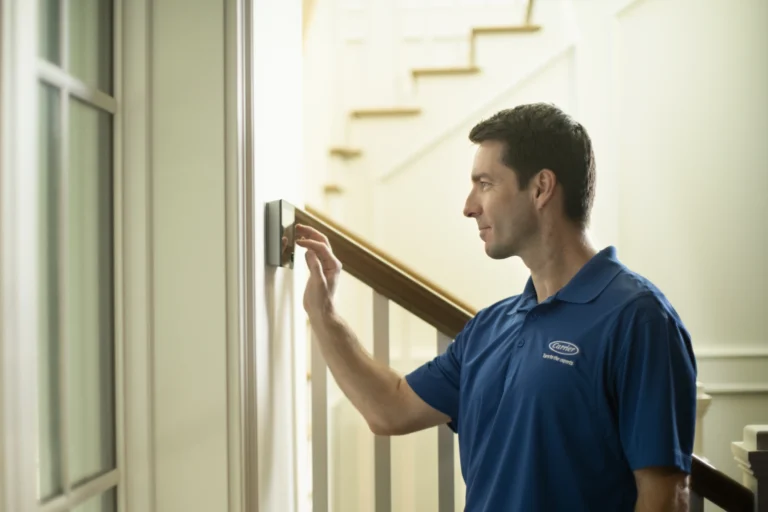

A furnace that clicks on but never reaches the set temperature, a heat pump that runs continuously without warming the rooms, or a burner that ignites with a loud thump — these are the signs that bring most Fletcher, OK homeowners to pick up the phone. Heating repair is rarely convenient, and problems tend to show up on the coldest nights when the system is working hardest. Understanding what is happening inside your equipment, and knowing what a proper repair involves, helps you make good decisions when the heat stops.
At Davis Air Conditioning / Heating, we handle heating repairs of every kind across Fletcher and the surrounding communities. Whether the trouble is a simple worn part or a complex control fault, our factory-trained technicians arrive with the parts, tools, and test instruments to diagnose the problem correctly the first time. This page explains how heating repair works, what usually goes wrong, and how we approach each service call.
Common Heating Problems Fletcher Homeowners Face
Most heating repairs trace back to a short list of causes. A furnace that will not start might have a failed igniter, a clogged flame sensor, a bad control board, or a tripped safety switch. A system that runs but blows cool air often has a fuel supply issue, a stuck gas valve, or a heat pump that has lost its charge. Weak airflow usually points to a dirty filter, a failing blower motor, or a blocked duct. Each symptom can have several possible sources, which is why a careful diagnosis matters more than a quick guess.
Age plays a large role as well. Heating equipment in this part of Oklahoma works through humid summers and sharp winter cold, and the constant temperature swings wear on components over time. Ignition parts, capacitors, and blower bearings all have a service life. When one part fails, the added strain can push nearby parts toward failure too. We look at the whole system during a repair so that we do not fix one fault only to have another appear a week later.
How We Diagnose a Heating Failure
Good repair starts with good diagnosis. When you call Davis Air Conditioning / Heating for heating repair in Fletcher, our technician follows a clear sequence rather than replacing parts at random. We check the thermostat, the power supply, and the safety switches before we open the equipment. Then we test the sequence of operation to see exactly where the system stops working.
The tools we use tell us what our eyes cannot. A multimeter reads voltage and resistance at each component. A combustion analyzer measures the flue gases from a gas furnace and confirms that the burner runs clean and safe. A set of refrigerant gauges shows the pressures inside a heat pump. These measurements let us find the true cause instead of the first symptom. A typical diagnosis moves through these steps:
- Confirm the complaint: We start the system and watch how it behaves so we can see the fault ourselves.
- Check the controls: We test the thermostat, wiring, and safety switches to rule out simple causes first.
- Test the components: We measure each major part — igniter, sensor, motor, valve, or compressor — to find the failed piece.
- Verify the repair: After the fix, we run a full heating cycle and take readings to confirm the system works correctly.
Gas Furnace Repairs
Gas furnaces remain one of the most common heating systems in Fletcher homes, and their repairs follow well-known patterns. A furnace that fails to light often has a cracked hot surface igniter or a flame sensor coated with residue. When the flame sensor cannot detect the flame, the control board shuts the gas valve as a safety measure, and the furnace tries again before it locks out. Cleaning or replacing these small parts often restores full operation quickly.
More serious furnace faults need careful attention. A failing inducer motor, a blocked flue, or a cracked heat exchanger all affect both performance and safety. Our technicians use combustion analysis to confirm that a repaired furnace produces safe exhaust and burns fuel efficiently. If we ever find a cracked heat exchanger, we explain the safety concern clearly and discuss the options, because a compromised heat exchanger can allow combustion gases to enter the home’s air.
Heat Pump Repairs
Heat pumps heat and cool from the same equipment, which makes them efficient but adds complexity to their repairs. In heating mode, a heat pump pulls warmth from the outside air and moves it indoors through the reversing valve. When that valve sticks, the system may blow cold air when it should be heating. When the defrost control fails, ice builds on the outdoor coil and blocks airflow. Both faults reduce heating output and can trip the auxiliary electric heat, which raises energy use.
Refrigerant problems affect heat pumps as well. A low charge means the system cannot move enough heat, so the home stays cold even while the unit runs. We test for leaks, repair them, and recharge the system to the manufacturer’s exact specification rather than topping it off by guess. Because heat pumps run in both seasons, a repair done right in winter protects the summer cooling performance too.
When to Repair and When to Replace
Not every heating problem calls for a full replacement, and we never push equipment that you do not need. A single failed part on a system that is only a few years old is almost always worth repairing. On the other hand, an older system that needs frequent repairs, uses more energy each season, and struggles to keep up may cost more to keep running than to replace. Homeowners often ask us how to decide, so here are the main points we weigh together:
- Age of the system: Most furnaces and heat pumps serve well for fifteen years or more, and repairs make good sense inside that range.
- Cost of the repair: A small repair on a working system is easy to justify, while a major repair on an aging unit deserves a closer look.
- Repair history: Several breakdowns in a short time signal that other parts may fail soon.
- Comfort and efficiency: If some rooms never warm up or bills keep climbing, a repair may only delay the real fix.
We give you honest information for each of these points so you can choose with confidence. When repair is the right answer, we make the repair. When replacement truly serves you better, we say so and explain why.
Emergency Heating Repair When You Need It
Heat does not fail on a schedule. A furnace that quits late at night or a heat pump that stops during a cold snap puts your family’s comfort and safety at risk. That is why Davis Air Conditioning / Heating keeps a fleet of trucks stocked with parts and equipment, so help is only minutes away for homes across Fletcher and the wider region. Because we carry the common failure parts on our trucks, we complete many repairs during the first visit instead of leaving you cold while we order components.
Our service area reaches well beyond Fletcher into Lawton, Geronimo, Elgin, Cache, Duncan, Comanche, Marlow, Fletcher, Central High, Walters, Apache, Hulen, Corum, and Velma and the communities between them. Wherever you are in Southwest Oklahoma, the same trained team and the same careful methods apply to your heating repair.
Why Fletcher Trusts Davis Air Conditioning / Heating
When we started Davis Air Conditioning / Heating in 1976, we had one goal in mind — providing area families with comfort solutions that fit not only their lifestyle, but their pocketbook. Since then, nothing has changed. That long history means we have repaired nearly every make and model of heating equipment installed in this region, and our technicians bring that experience to each call.
We offer expert installation and maintenance by a skilled team of factory-trained professionals, and that training shows in the quality of our repairs. Whether you need routine maintenance, emergency repair, replacement equipment, or a complete system replacement, we are the people you can count on for all your family’s home comfort needs. When your heat fails in Fletcher, call Davis Air Conditioning / Heating and let us set things right.